LATE SUMMER GARDEN UPGRADES AND MAINTENANCE
Category: Landscaping
Published: 13/08/2021
Don't despair that summer is almost over! You can still have a well-groomed garden and enjoy the outdoors well into Autumn.
CARE FOR YOUR COMPOSITE DECKING
You will have been enjoying the summer with your new composite deck but now it is time to give it that little maintenance it deserves.
You may have experienced some stains on your deck from barbecues, wine stains or general dirt so it is always wise to follow the manufacturers advice as a lot will depend on the type of composite that you have.
If you have a brushed effect on your deck a wire brush can be used to gently remove stubborn stains.
It is always best to clear leaves and debris off your deck over the autumn and winter months to keep it looking in top condition, unlike wooden decking composite doesn’t rot, will not need staining and is resistant to algae growth so if you follow the manufacturers guidelines your deck will look as good as new next spring.
GET YOUR TIMBER DECKING READY FOR WINTER
Ensuring your decking survives the harsh weather us Scots endure through the winter is vital for prolonging the life of your garden sanctuary. After investing in your decking, the next step, naturally, is to maintain your deck so you can enjoy it for many years to come.
The first step to take is to ensure everything on the decking is cleared away and stored securely. Move tables and chairs off the decking and make sure barbeques and other furniture are removed from the decking to prevent rust and mould from forming.
Snow needs to be removed as quickly as possible; the build-up of snow and ice can cause rotting to the structure of your decking. Try to avoid using a shovel as this will drag across the wood and damage it. Instead, use a hard-bristled brush to push the snow off.
Having clean decking doesn’t have to be a chore. Once or twice a year, give your decking a thorough brush followed by a light wash with a garden hose. There are a number of decking cleaners available for the specific type of timber or composite decking that your deck is built with. Use these a couple of times a year to keep your decking looking fresh and revitalised.
The most proactive measure to take to achieve clean decking would be to use a protector, decking stain, or decking oil. Decking protector is absorbed by the water already present in the wood, giving it a waterproof layer, whereas decking stain will permanently dye the decking, making it weatherproof. A decking oil applies a thin layer of oil that prevents stains and minor damage while adding a fresh and subtle colour to the wood.
PREPARE YOUR FENCE FOR WINTER
Below are our top tips to being prepared and ensuring your fence lasts the winter season.
1. PERFORM A VISUAL CHECK
It is well worth taking a wander along the existing fence line to check for any visible signs of damage, rot or decay. If your fence is looking a little worse for wear, it may be worth considering whether or not to replace the current installation so that it will stand up to prolonged poor weather conditions or a storm.
2. CLEAR AWAY ANY DEBRIS FROM THE FENCE
Move leaves and debris away from the fence line as leaves can trap moisture against the fence causing the timber to decay prematurely and faster than it naturally would without any ground contact. This is one of the many reasons we recommend using a gravel board because its primary purpose is to raise the fencing away from the ground to avoid contact. If it snows, don’t create drifts near the fence as again there will be a build up in moisture.
3. REMOVE WEAK OR LOW HANGING BRANCHES
In the strong wind, or heavy snow, branches could potentially fall and damage your fence.
4. CHECK THE POSTS
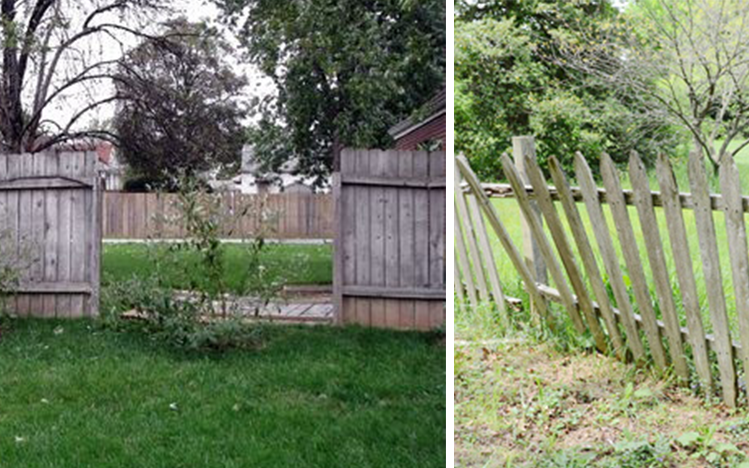
One of the most common causes of fences not staying where you want them to be - which is hopefully upright - is because the posts are of inferior quality. If you see a fence at a funny angle, look down at where the posts meet the ground, quite often you will see the reason the fence is leaning in a precarious manner is because the posts have rotted at ground level. If you think about it, a fence panel is a bit like a sail, a large flat surface that will by its very nature catch a hefty dose of wind – the wind loading on the panel will put a fair amount of strain on the posts at the fixed point they go into the ground. Any weakening in the post due to continued soaking in the ground, bad quality timber and lack of treatment, and the post will eventually snap like a match stick!
PREPARE YOUR SLABS AND DRIVEWAY FOR WINTER
Concrete and Slabs also need to be looked after and prepared ready for the winter weather. Check for any accumulated debris, including any weeds or unwanted growth; they may not thrive in the winter months, but you want to keep your driveway in the best possible condition. Paving slabs and blocks can be cleaned using a stiff yard brush and soapy water. A pressure washer will do the job effectively, but be very careful to avoid any surface damage or loosening of jointing compound materials. Other paving cleaners can be purchased from IBT.
It's also time to see what kind of wear and tear the summer's use has had; check especially for spilt liquids like oil or other chemical products.
Once your driveway and garden paving is clean and clear, check for cracks or emerging gaps. These need to be filled; snow and ice can only make them worse, so it’s essential you repair any existing damage to your driveway before winter.
Patios, driveway and garden paving can become very slippery and dangerous if you allow a build up of ice which is hidden by fresh snowfall. Anyone with a sloping drive or path will know exactly how tricky that can be!
There is some debate over the best way to de-ice your driveway, but make sure you are using something granular for your own safety. Sand is a safe option and we recommend investing in a couple of bags of sand at the beginning of winter. If heavy snowfall begins, make sure you keep the family safe by shovelling it over a high traffic area every so often.
There's no shortage of de-icing salts on the market, but some of these contain ammonium sulphates and nitrates. These can be detrimental to concrete, so make sure you've researched what to use and contact us if you're unsure. Something as simple as sand is a safe bet that won't do any damage to your block paving or garden plants. You can even use cat litter in place of sand at a pinch!
- We suggest you follow these essential steps to keep your paving safe in cold weather:
- sweep and clear paved surfaces
- remove debris, stains, spillages and any foreign objects in gaps
- check for cracks and crannies then fill them in
- invest in some bags of sand to spread over your driveway and path
- bring on winter!
There is some debate over the best way to de-ice your driveway, but make sure you are using something granular for your own safety. Sand is a safe option and we recommend investing in a couple of bags of sand at the beginning of winter. If heavy snowfall begins, make sure you keep the family safe by shovelling it over high traffic areas every so often.
There’s no shortage of de-icing salts on the market, but some of these contain ammonium sulphates and nitrates. These can be detrimental to concrete, so make sure you’ve researched what to use and contact us if you’re unsure. Something as simple as sand is a safe bet that won’t do any damage to your block paving or garden plants. You can even use cat litter in place of sand in a pinch!
We suggest you follow these essential steps to keep your paving safe in cold weather:
- Sweep and clear paved surfaces
- Remove debris, stains, spillages and any foreign objects in gaps
- Check for cracks and crannies then fill them in
- Invest in some bags of sand to spread over your driveway and paths
- Bring on winter!There is
some debate over the best way to de-ice your driveway, but make sure you are
using something granular for your own safety. Sand is a safe option and we
recommend investing in a couple of bags of sand at the beginning of winter. If
heavy snowfall begins, make sure you keep the family safe by shovelling it over
high traffic areas every so often.
There’s no
shortage of de-icing salts on the market, but some of these contain ammonium
sulphates and nitrates. These can be detrimental to concrete, so make sure
you’ve researched what to use and contact us if you’re unsure. Something as
simple as sand is a safe bet that won’t do any damage to your block paving or
garden plants. You can even use cat litter in place of sand in a pinch!
We suggest
you follow these essential steps to keep your paving safe in cold weather:
·
Sweep
and clear paved surfaces
·
Remove
debris, stains, spillages and any foreign objects in gaps
·
Check
for cracks and crannies then fill them in
·
Invest
in some bags of sand to spread over your driveway and paths
·
Bring
on winter!