WHY IS ROCK SALT IMPORTANT
Category: General
Published: 10/01/2024
Sendha namak, a type of salt, is formed when salt water from a sea or lake evaporates and leaves behind colourful crystals of sodium chloride. It’s also called halite, saindhava lavana, or rock salt.
Most of the salt we use in cooking, both table salt and Kosher salt, is made by flooding underground salt deposits with freshwater, extracting the water and then evaporating it to leave the pure salt crystals behind. A smaller proportion, which is known as sea salt, is produced by evaporating the salt from seawater. Rock salt, on the other hand, is dug out of the earth directly, so that it retains its cube-shaped crystalline form.
Because rock salt contains additional minerals and other impurities, it's not intended for human consumption, although it does have culinary applications, such as for making ice cream and for keeping coolers cold.
These uses have to do with the fact that salt lowers the melting point of water, which means that ice water with salt in it will get colder, while still remaining liquid, than water without salt. Thus, adding salt allows an ice water bath to reach temperatures as cold as 6 degrees below zero (F) without freezing solid.
Varieties of Rock Salt
Some forms of food-grade rock salt can be used for making brines, and they can also be used in salt grinders. But one of the main uses for rock salt is for de-icing roads and sidewalks, again due to the fact that it lowers the melting temperature of water so that it stays liquid at colder temperatures. This type of rock salt is not intended for human consumption, although it can be used for making ice cream, since it doesn't come into contact with the food.
Rock Salt Vs. Sea Salt
Rock salt and sea salt are sometimes confused for one another. Rock salt is usually inedible, unless it is expressly labelled as food grade. But sea salt is specifically intended for use as a seasoning, and can be quite expensive. Rock salt, by comparison, is cheaper by weight than ordinary table salt.
What Does It Taste Like?
Rock salt, including ice cream salt, is not intended for consumption. But if you were to taste the food-grade type, it would taste salty.
Cooking With Rock Salt
As mentioned, some food-grade rock salts can be used as a seasoning and for making brines. But one of the most common culinary uses for rock salt is for making ice cream. Ice cream is made by combining milk, cream, sugar and other flavouring ingredients, then using some sort of combined stirring and chilling technique.
In the days before electric ice cream makers, ice cream was made in a double bowl setup, where the ingredients went into a small bucket, while a larger bucket was filled with ice water and rock salt. Then the small bucket was immersed in the large one and you'd crank a handle to churn and chill the mixture until frozen. Sometimes you'd have to add more ice and salt. Some devices substituted an electric motor for the hand crank, and machines like these are still available today. If you use one, rock salt is what you'd use to chill the ice water.
Substitutions
Interestingly enough, you can use any type of salt in place of rock salt, including table salt or Kosher salt. The main reason you might not want to do so is because rock salt is cheaper, and you'd need to use the same amount of table or Kosher salt, by weight, as you would rock salt. But chemically, any household salt will work for making ice cream.
Uses of Rock Salt
Apart from the culinary uses described, you can also add rock salt to the ice in your cooler, which, by lowering the melting temperature, will help your ice stay frozen longer. Another use is as a water softener. And of course, rock salt is often used to melt the ice on roads and paths.
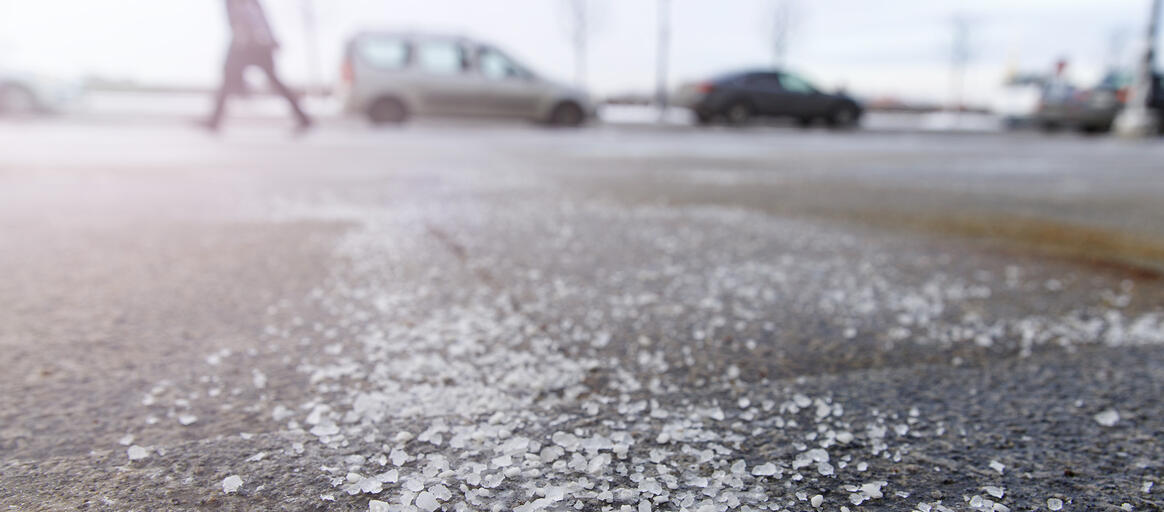
Why Choose Rock Salt to Clear Your Paths and Driveways?
Rock salt is easy to use, easy to get a hold of and very efficient when it comes to removing ice from pathways. When rock salt is put out on the drive before the snow arrives, or when the snow has settled, it can melt away any ice leaving it much easier for you to get your car out.
.png)
How to Use Rock Salt
Before applying the rock salt to the road make sure to try and shovel away any loose snow on the top of the path. This will mean that the rock salt can work on melting away the ice underneath instead.
Once you have scraped away the snow, apply the rock salt evenly across the path or driveway. You can spread rock salt manually with a shovel or scoop.
For larger areas, or to apply rock salt at greater speed, it may be worth considering a rock salt spinner. These wheeled spreaders offer up to 8 metres coverage with adjustable flow and accurate distribution. Spinners and spreaders come in a choice of manual push-along and vehicle tow-behind models.
Where to Buy Rock Salt
IBT stock rock salt in 25kg bags and also in bulk bags.