When weather conditions are perfect, your deck is an excellent place to relax outdoors and enjoy the sun and fresh air. But conditions aren’t always perfect, and the adverse weather can turn your deck into a slippery mess that can be potentially dangerous.
Here are a few basic things you can do to keep your decking safe and dry:
How does decking become slippery?
Wood is porous
Most wood isn’t a sealed substance. Many types of wood can quickly become impregnated with water as liquid gathers between the fibres of the material.
To prevent this, wood needs to be treated either by your supplier or by you or your garden landscaper after it’s been put in place. You also need to be sure that there are no areas of your decking where water might naturally pool.
Algae, moss, mould, and other growth
If water or even moisture regularly collects on your decking, it can lead to ideal conditions for algae, moss, and other growth to form.
This is often exacerbated in winter conditions, which tend to include less sunlight and lower temperatures.
Leaves and other debris
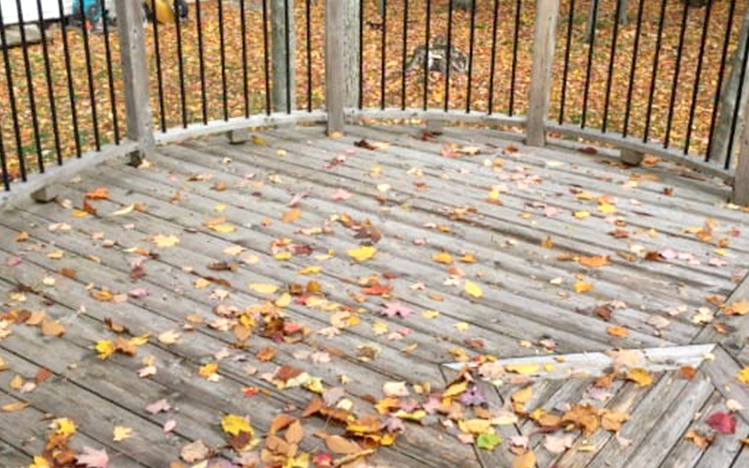
Debris which builds up on the surface and in the corners of your deck is one of the leading causes of slippery decking.
Leaves and debris are a potential source of slippery danger in and of themselves. But they can also encourage algae, mould, fungus, and other growth to appear. Especially when they get wet and are allowed to remain in place.
How to Prevent a Deck From Getting Slippery
By performing certain regular maintenance to your deck, you can greatly reduce or even eliminate the chances of your deck getting slippery this year.
Sweep Regularly to Clear the Debris
We sweep the insides of our homes regularly to prevent the dirt and mess from building up. Well, the same works for your deck as well.
As mentioned, when the leaves and debris pile up, it holds moisture to the deck, which creates a breeding ground for the mould that can make your deck so slick. One of the easiest ways to prevent this is to regularly sweep all of the leaves and debris and remove them from your deck.
This is particularly important after heavy rain or storms.
Ensure Proper Drainage
The next step to eliminating the moisture that allows algae and moss to grow on your deck is to ensure that your deck is draining properly.
You might have noticed that there’s a small gap between each of your decking boards. These gaps are meant to allow for expansion and contraction of the boards, but they’re also meant to allow water and moisture to drain out, so they don’t sit on your deck and allow anything to grow.
Whenever the dirt and debris build up on your deck, these drainage spaces can fill up, preventing the water from draining properly. When this happens, you’ll get water pooling and excess moisture that can lead to a slick deck surface in the near future.
To prevent this, simply clear out the spaces between decking boards to ensure they can drain properly. You can use a small putty knife or screwdriver between the boards to dislodge anything that might be filling up the spaces.
Perform A Thorough Deck Cleaning
Regularly sweeping your deck to avoid the build up of debris and dirt is a great idea, but it’s not going to keep your deck surface completely clean. To do the job, you’ll need to do a thorough cleaning of your entire deck once or twice each year.
To do this properly, you’ll need a power washer and some cleaning solution. You can make the solution yourself or buy a pre-made formula.
However, you won’t want to power wash your deck every time you sweep it. Limit the power washing and thorough cleaning to once or twice each year to avoid prematurely wearing out your decking.
.png)
How to Make Decking Non Slip
Now we’ve discussed ways to prevent your deck from becoming slippery. But what should you do if your deck is already a hazard that’s waiting to make someone fall? Here are some solutions for you that will help to fix your slippery decking problems today.
Scrub Away the Algae With a Homemade Solution
If your deck is slippery, you probably already have algae, mould, and/or mildew building up. To make your deck safe for walking again, you’ll need to remove that algae and mould. One great way to do this is by making your own algae-killing solution at home.
To create your mould killer, you’ll need powdered laundry detergent (the kind that’s free of ammonia), oxygen bleach (not chlorine bleach), and water. First, mix one cup of the powdered laundry detergent with one quart of the oxygen bleach in two to three gallons of water. Mix it together. Then, using a mop or a sprayer, coat the entire deck in your solution. You’ll want to let it sit for about 20 to 30 minutes so it can work its magic. After letting it sit, take a stiff-bristled broom and scrub down your deck, removing all of the algae and moss. Once you’ve brushed it off, take a hose and do a final rinse to ensure that you’ve removed everything.
Apply an Algae and Moss Killer
Not everyone is up for the DIY approach, so instead, you can opt for the shop-bought solution that kills algae, mildew, and mould. It will do the same job with a similar level of effectiveness.
The process is essentially the same, minus the steps that involve mixing your solution. Just take the mould and mildew killer and spray or mop it onto your deck surface. Allow it to sit for 20 or 30 minutes so that it can kill the algae and mould. After letting it work for about 30 minutes, simply take a broom and sweep the mess off before giving it a final rinse.
Pressure Wash Your Deck
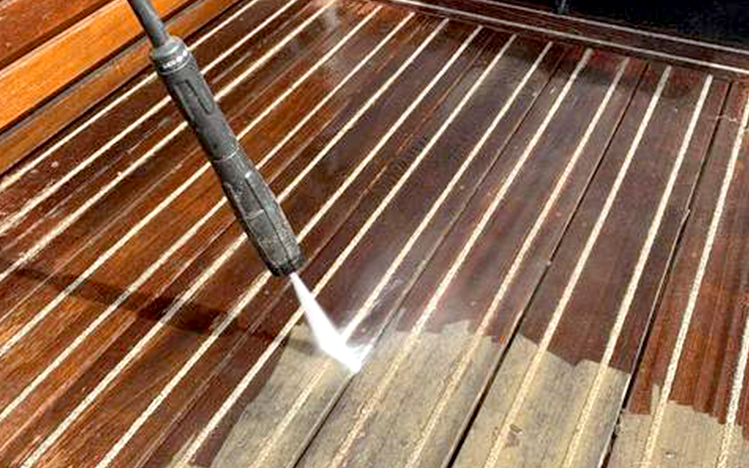
Some people prefer instant gratification. If this sounds like you and you don’t want to wait 30 minutes for the solution to take effect or you don’t want to sweep the algae off the deck with a broom, then you might try a power washer instead.
Paint with Non-Slip Paint
If your deck seems to be slippery too often, then the problem might be what it is or isn’t coated with. Many decks are painted with normal paint or stained with a regular wood stain. While this might look great, it’s not the best choice when it comes to providing traction and grip.
Treat Your Deck With a Waterproof Coating
If your deck is getting too slippery, then one of the major culprits is moisture. As moisture accumulates on your deck, it creates the perfect breeding ground for algae, moss, mildew, and anything else that can grow and make your deck hazardously slick.
One great way to prevent this from happening is by using a waterproof coating to cover your entire deck. This will prevent the water from every accumulating and do wonders to curb your slippery deck problems.
These coatings are very easy to apply. You simply paint them on like any other type of coating or paint. You can use a brush, roller, or even a sprayer. Just make sure you get an even coating everywhere.

Use Anti-Slip Tape
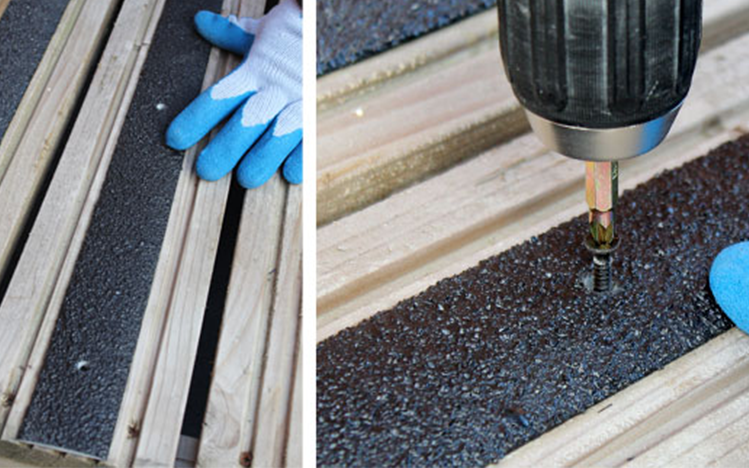
Anti-slip tape is easy to install, is quick, and it’s cheap as well. In fact, it’s one of the fastest and easiest solutions. Just like any other type of tape, anti-slip tape comes in a roll. You’ll just pull off the amount you need and stick it onto the deck. It’s dead-simple.
Unlike regular tape, anti-slip tape has tons of grip on the top, similar to sandpaper. This will provide you with plenty of traction, even when your deck gets slick.
It’s important that you have a completely clean and dry surface for the tape to stick to. Make sure you thoroughly clean the deck and allow it to dry before you attempt to apply anti-slip tape. One advantage of anti-slip tape is that it’s not raised off the surface of the deck, so it doesn’t present a tripping hazard.
Conclusion
A slippery deck can be a real liability. Before you or someone you love gets hurt, it’s a good idea to nip your slippery deck problems in the bud with one of the solutions provided.
- Sweep Regularly to Clear the Debris
We sweep the insides of our homes regularly to prevent the dirt and mess from building up. Well, the same works for your deck as well.
As mentioned, when the leaves and debris pile up, it holds moisture to the deck, which creates a breeding ground for the mould that can make your deck so slick. One of the easiest ways to prevent this is to regularly sweep all of the leaves and debris and remove them from your deck.
This is particularly important after heavy rain or storms.
2. Ensure Proper Drainage
The next step to eliminating the moisture that allows algae and moss to grow on your deck is to ensure that your deck is draining properly.
You might have noticed that there’s a small gap between each of your decking boards. These gaps are meant to allow for expansion and contraction of the boards, but they’re also meant to allow water and moisture to drain out, so they don’t sit on your deck and allow anything to grow.
Whenever the dirt and debris build up on your deck, these drainage spaces can fill up, preventing the water from draining properly. When this happens, you’ll get water pooling and excess moisture that can lead to a slick deck surface in the near future.
To prevent this, simply clear out the spaces between decking boards to ensure they can drain properly. You can use a small putty knife or screwdriver between the boards to dislodge anything that might be filling up the spaces.
3. Perform A Thorough Deck Cleaning
Regularly sweeping your deck to avoid the build up of debris and dirt is a great idea, but it’s not going to keep your deck surface completely clean. To do the job, you’ll need to do a thorough cleaning of your entire deck once or twice each year.
To do this properly, you’ll need a power washer and some cleaning solution. You can make the solution yourself or buy a pre-made formula.
However, you won’t want to power wash your deck every time you sweep it. Limit the power washing and thorough cleaning to once or twice each year to avoid prematurely wearing out your decking.
1. Sweep Regularly to Clear the Debris
We sweep the insides of our homes regularly to prevent the dirt and mess from
building up. Well, the same works for your deck as well.
As mentioned, when the leaves and debris pile up, it holds moisture to
the deck, which creates a breeding ground for the mould that can make your deck
so slick. One of the easiest ways to prevent this is to regularly sweep all of
the leaves and debris and remove them from your deck.
This is particularly important after heavy rain or storms.
2. Ensure Proper
Drainage
The next step to
eliminating the moisture that allows algae and moss to grow on your deck is to
ensure that your deck is draining properly.
You might have noticed that there’s a small gap between each
of your decking boards. These gaps are meant to allow for expansion and
contraction of the boards, but they’re also meant to allow water and moisture
to drain out, so they don’t sit on your deck and allow anything to grow.
Whenever the dirt and debris build up on your deck, these
drainage spaces can fill up, preventing the water from draining properly. When
this happens, you’ll get water pooling and excess moisture that can lead to a
slick deck surface in the near future.
To prevent this, simply clear out the spaces between decking
boards to ensure they can drain properly. You can use a small putty knife or
screwdriver between the boards to dislodge anything that might be filling up
the spaces.
3. Perform A Thorough Deck Cleaning
Regularly sweeping your deck to avoid the build up of debris
and dirt is a great idea, but it’s not going to keep your deck surface
completely clean. To do the job, you’ll need to do a thorough cleaning of your
entire deck once or twice each year.
To do this properly, you’ll need a power washer and some
cleaning solution. You can make the solution yourself or buy a pre-made
formula.
However, you won’t want to power wash your deck every time
you sweep it. Limit the power washing and thorough cleaning to once or twice
each year to avoid prematurely wearing out your decking.How to Prevent a Deck From Getting Slippery
By performing certain regular maintenance to your deck, you can greatly reduce or even eliminate the chances of your deck getting slippery this year.
- Sweep Regularly to Clear the Debris
We sweep the insides of our homes regularly to prevent the dirt and mess from building up. Well, the same works for your deck as well.
As mentioned, when the leaves and debris pile up, it holds moisture to the deck, which creates a breeding ground for the mould that can make your deck so slick. One of the easiest ways to prevent this is to regularly sweep all of the leaves and debris and remove them from your deck.
This is particularly important after heavy rain or storms.
2. Ensure Proper Drainage
The next step to eliminating the moisture that allows algae and moss to grow on your deck is to ensure that your deck is draining properly.
You might have noticed that there’s a small gap between each of your decking boards. These gaps are meant to allow for expansion and contraction of the boards, but they’re also meant to allow water and moisture to drain out, so they don’t sit on your deck and allow anything to grow.
Whenever the dirt and debris build up on your deck, these drainage spaces can fill up, preventing the water from draining properly. When this happens, you’ll get water pooling and excess moisture that can lead to a slick deck surface in the near future.
To prevent this, simply clear out the spaces between decking boards to ensure they can drain properly. You can use a small putty knife or screwdriver between the boards to dislodge anything that might be filling up the spaces.
3. Perform A Thorough Deck Cleaning
Regularly sweeping your deck to avoid the build up of debris and dirt is a great idea, but it’s not going to keep your deck surface completely clean. To do the job, you’ll need to do a thorough cleaning of your entire deck once or twice each year.
To do this properly, you’ll need a power washer and some cleaning solution. You can make the solution yourself or buy a pre-made formula.
However, you won’t want to power wash your deck every time you sweep it. Limit the power washing and thorough cleaning to once or twice each year to avoid prematurely wearing out your decking.
How to
Prevent a Deck From Getting Slippery
By
performing certain regular maintenance to your deck, you can greatly reduce or
even eliminate the chances of your deck getting slippery this year.
1. Sweep Regularly to Clear the Debris
We sweep the insides of our homes regularly to prevent the dirt and mess from
building up. Well, the same works for your deck as well.
As mentioned, when the leaves and debris pile up, it holds moisture to
the deck, which creates a breeding ground for the mould that can make your deck
so slick. One of the easiest ways to prevent this is to regularly sweep all of
the leaves and debris and remove them from your deck.
This is particularly important after heavy rain or storms.
2. Ensure Proper
Drainage
The next step to
eliminating the moisture that allows algae and moss to grow on your deck is to
ensure that your deck is draining properly.
You might have noticed that there’s a small gap between each
of your decking boards. These gaps are meant to allow for expansion and
contraction of the boards, but they’re also meant to allow water and moisture
to drain out, so they don’t sit on your deck and allow anything to grow.
Whenever the dirt and debris build up on your deck, these
drainage spaces can fill up, preventing the water from draining properly. When
this happens, you’ll get water pooling and excess moisture that can lead to a
slick deck surface in the near future.
To prevent this, simply clear out the spaces between decking
boards to ensure they can drain properly. You can use a small putty knife or
screwdriver between the boards to dislodge anything that might be filling up
the spaces.
3. Perform A Thorough Deck Cleaning
Regularly sweeping your deck to avoid the build up of debris
and dirt is a great idea, but it’s not going to keep your deck surface
completely clean. To do the job, you’ll need to do a thorough cleaning of your
entire deck once or twice each year.
To do this properly, you’ll need a power washer and some
cleaning solution. You can make the solution yourself or buy a pre-made
formula.
However, you won’t want to power wash your deck every time
you sweep it. Limit the power washing and thorough cleaning to once or twice
each year to avoid prematurely wearing out your decking.How to Prevent a Deck From Getting Slippery
By performing certain regular maintenance to your deck, you can greatly reduce or even eliminate the chances of your deck getting slippery this year.
- Sweep Regularly to Clear the Debris
We sweep the insides of our homes regularly to prevent the dirt and mess from building up. Well, the same works for your deck as well.
As mentioned, when the leaves and debris pile up, it holds moisture to the deck, which creates a breeding ground for the mould that can make your deck so slick. One of the easiest ways to prevent this is to regularly sweep all of the leaves and debris and remove them from your deck.
This is particularly important after heavy rain or storms.
2. Ensure Proper Drainage
The next step to eliminating the moisture that allows algae and moss to grow on your deck is to ensure that your deck is draining properly.
You might have noticed that there’s a small gap between each of your decking boards. These gaps are meant to allow for expansion and contraction of the boards, but they’re also meant to allow water and moisture to drain out, so they don’t sit on your deck and allow anything to grow.
Whenever the dirt and debris build up on your deck, these drainage spaces can fill up, preventing the water from draining properly. When this happens, you’ll get water pooling and excess moisture that can lead to a slick deck surface in the near future.
To prevent this, simply clear out the spaces between decking boards to ensure they can drain properly. You can use a small putty knife or screwdriver between the boards to dislodge anything that might be filling up the spaces.
3. Perform A Thorough Deck Cleaning
Regularly sweeping your deck to avoid the build up of debris and dirt is a great idea, but it’s not going to keep your deck surface completely clean. To do the job, you’ll need to do a thorough cleaning of your entire deck once or twice each year.
To do this properly, you’ll need a power washer and some cleaning solution. You can make the solution yourself or buy a pre-made formula.
However, you won’t want to power wash your deck every time you sweep it. Limit the power washing and thorough cleaning to once or twice each year to avoid prematurely wearing out your decking.How to
Prevent a Deck From Getting Slippery
By
performing certain regular maintenance to your deck, you can greatly reduce or
even eliminate the chances of your deck getting slippery this year.
1. Sweep Regularly to Clear the Debris
We sweep the insides of our homes regularly to prevent the dirt and mess from
building up. Well, the same works for your deck as well.
As mentioned, when the leaves and debris pile up, it holds moisture to
the deck, which creates a breeding ground for the mould that can make your deck
so slick. One of the easiest ways to prevent this is to regularly sweep all of
the leaves and debris and remove them from your deck.
This is particularly important after heavy rain or storms.
2. Ensure Proper
Drainage
The next step to
eliminating the moisture that allows algae and moss to grow on your deck is to
ensure that your deck is draining properly.
You might have noticed that there’s a small gap between each
of your decking boards. These gaps are meant to allow for expansion and
contraction of the boards, but they’re also meant to allow water and moisture
to drain out, so they don’t sit on your deck and allow anything to grow.
Whenever the dirt and debris build up on your deck, these
drainage spaces can fill up, preventing the water from draining properly. When
this happens, you’ll get water pooling and excess moisture that can lead to a
slick deck surface in the near future.
To prevent this, simply clear out the spaces between decking
boards to ensure they can drain properly. You can use a small putty knife or
screwdriver between the boards to dislodge anything that might be filling up
the spaces.
3. Perform A Thorough Deck Cleaning
Regularly sweeping your deck to avoid the build up of debris
and dirt is a great idea, but it’s not going to keep your deck surface
completely clean. To do the job, you’ll need to do a thorough cleaning of your
entire deck once or twice each year.
To do this properly, you’ll need a power washer and some
cleaning solution. You can make the solution yourself or buy a pre-made
formula.
However, you won’t want to power wash your deck every time
you sweep it. Limit the power washing and thorough cleaning to once or twice
each year to avoid prematurely wearing out your decking.